Crews reach for the chop saw when custom millwork does not fit as drawn. That moment costs time, money, and trust on site. Install-ready millwork eliminates that scramble through disciplined millwork tolerances and clear dimensional control. You want panels, trims, and profiles to arrive ready for fast, clean installation without field correction.
Custom millwork only performs as intended when made-to-order millwork reflects actual site conditions. Accurate inputs, coordinated drawings, and controlled fabrication protect your schedule. Reduced rework starts long before delivery day. It begins with scope clarity and tolerance standards that align design intent with construction reality.
Custom Millwork Scope That Impacts Installation Time And Fit
Custom millwork scope defines how your material will perform once it reaches site. Installation time often reflects decisions made months earlier during specification and detailing. Install-ready millwork depends on clarity around substrate conditions, fastening methods, joint strategy, and expansion allowances. When scope is vague, crews compensate in the field.
Millwork tolerances vary depending on application, species, and exposure conditions. Exterior cladding systems require different dimensional allowances than interior wall and ceiling applications. Made-to-order millwork must reflect actual wall lengths, corner conditions, and termination details. Reduced rework follows when your scope accounts for these realities from the outset.
Precise scope also includes finish expectations and sequencing. Prefinished material demands tighter coordination around storage and protection. Site-applied finishes introduce different moisture considerations that influence fit. Installation success depends on understanding these details before production begins.
Made-To-Order Millwork Inputs That Set Accurate Dimensions
Accurate made-to-order millwork begins with disciplined data collection. Fabrication tolerances can only be respected when your inputs reflect true site conditions. Install-ready millwork relies on coordinated measurements rather than assumptions. Clear dimensional strategy protects your schedule and reduces rework once material arrives.
- Verified field measurements: Confirmed wall lengths and heights prevent sliver boards and forced adjustments. Laser measurements paired with physical checks provide dependable references for custom millwork.
- Substrate flatness reports: Drywall and sheathing irregularities affect millwork tolerances more than many teams expect. Documented deviations help adjust profile dimensions before production.
- Expansion allowances: Wood responds to moisture and temperature. Accounting for seasonal movement in made-to-order millwork protects long runs from pressure buildup.
- Minimum board length requirements: Defined length parameters reduce awkward seams and cut waste. Install-ready millwork benefits from thoughtful planning around end conditions.
- Joint layout strategy: Stagger patterns, control joints, and termination points influence visual rhythm and structural performance. Coordinated layouts reduce rework during installation.
- Finish thickness considerations: Prefinishing adds measurable build. Adjusting dimensions to reflect coating thickness supports precise fit on site.
Disciplined inputs align your custom millwork with actual construction realities. Fabricators can only respect millwork tolerances when they receive reliable information. Install-ready millwork depends on these upstream decisions. Reduced rework is rarely accidental and usually traces back to accurate dimensional control.
Millwork Tolerances That Align With AWI And NAAWS Standards
Millwork tolerances reflect both industry standards and project-specific expectations. AWI and NAAWS provide reference points that guide dimensional variation, profile consistency, and finish quality. Install-ready millwork respects these standards while accounting for wood movement and site conditions. Your specification must translate tolerance language into practical fabrication parameters.
Dimensional Variation Control
Dimensional consistency determines how custom millwork aligns across long runs. AWI standards outline acceptable variation ranges for width, thickness, and profile detail. Install-ready millwork applies these benchmarks while refining them to match project performance goals. Accurate machining and calibrated equipment support predictable results.
Wood movement complicates dimensional stability. Species selection and modification processes influence how boards respond to moisture shifts. Made-to-order millwork must account for this behaviour within stated millwork tolerances. Reliable fit depends on understanding both manufacturing accuracy and material characteristics.
Profile Precision And Edge Definition
Profile fidelity affects both aesthetics and joint alignment. NAAWS references help establish acceptable tolerances for edge sharpness and contour uniformity. Install-ready millwork requires tight control over tooling wear and moulder setup. Minor inconsistencies compound quickly across hundreds of linear feet.
Consistent profiling reduces visible variation at seams and corners. Custom millwork designed for exterior cladding demands even tighter control to prevent shadow line irregularities. Respecting millwork tolerances at the profile level limits field sanding and reshaping. Reduced rework begins with clean, repeatable milling.
Moisture Content Parameters
Moisture content targets influence expansion and contraction once installed. AWI guidance emphasizes equilibrium levels suited to installation conditions. Install-ready millwork aligns moisture content with anticipated service exposure. Fabrication without this discipline increases the likelihood of gaps or buckling.
Storage and acclimatization plans must reflect these parameters. Made-to-order millwork shipped across regions requires careful planning around climate differences. Clear documentation supports compliance with specified millwork tolerances. Stability after installation reflects moisture control during production.
Finish And Surface Quality Benchmarks
Surface quality expectations extend beyond visual appeal. AWI and NAAWS benchmarks outline acceptable finish consistency and defect allowances. Install-ready millwork integrates finishing processes that preserve profile geometry and dimensional intent. Excessive sanding can unintentionally alter tolerances.
Finish build thickness must also be considered within millwork tolerances. Coatings alter final dimensions and can affect joint fit. Made-to-order millwork that anticipates finish accumulation protects clean installation. Consistent surface preparation supports uniform results across the project.
Clear alignment with AWI and NAAWS standards builds confidence in your custom millwork specification. Install-ready millwork reflects disciplined control at each production stage. Millwork tolerances are only effective when understood and applied in context. Reduced rework follows when standards guide both design and fabrication decisions.
Install-Ready Millwork Shop Drawings That Prevent Field Surprises
Shop drawings translate intent into buildable detail. Install-ready millwork depends on drawings that reflect true dimensions and coordination with adjacent trades. Clear annotations around millwork tolerances reduce ambiguity during fabrication. Strong drawing discipline protects your timeline and reduces rework.
Profiled To Correct Tolerances
Profiles must reflect specified tolerances and actual substrate conditions. Custom millwork drawings should note exact profile dimensions and acceptable variation ranges. Install-ready millwork benefits when profile depth accounts for fastening and drainage requirements. Fabrication teams rely on these details to calibrate equipment accurately.
Profile adjustments often occur when walls are out of plane. Drawings that capture these realities limit field trimming. Made-to-order millwork fabricated to corrected tolerances reduces crew intervention. Clean installation follows clear dimensional instruction.
Prefinished If Required
Prefinished install-ready millwork requires additional drawing clarity. Notations should specify coating type, thickness, and edge treatment. Millwork tolerances must account for finish build to prevent tight fits. Coordination with site sequencing ensures protection during installation.
Finish requirements also influence handling instructions. Shop drawings should reflect masking needs or touch-up procedures. Custom millwork that anticipates finish constraints limits site modifications. Reduced rework often ties back to finish coordination.
End-Coated
End coating plays a significant role in moisture control. Drawings should clearly indicate when boards require sealed end grain. Install-ready millwork designed for exterior use benefits from this added protection. Moisture intrusion at cut ends often leads to premature movement.
End-coated requirements must be visible in fabrication notes. Made-to-order millwork that incorporates this detail arrives prepared for exposure. Clear communication prevents omissions. Long-term stability reflects attention to small protective measures.
Length-Optimized
Length planning influences seam placement and visual continuity. Shop drawings should specify minimum and maximum board lengths. Install-ready millwork that reflects length optimization reduces awkward transitions. Coordinated seam planning supports structural integrity.
Long runs require careful joint distribution. Custom millwork that ignores length strategy often leads to sliver pieces. Millwork tolerances alone cannot compensate for poor layout planning. Thoughtful drawing coordination protects both aesthetics and performance.
Engineered For Expansion
Expansion allowances must appear clearly on shop drawings. Wood movement varies by species and exposure conditions. Install-ready millwork requires gap detailing that accommodates seasonal shifts. Drawings that omit expansion logic invite future stress points.
Joint spacing and fastening strategies should reflect these allowances. Made-to-order millwork engineered for movement maintains alignment over time. Clear documentation limits on-site guesswork. Reduced rework often starts with realistic movement planning.
Designed To Minimize Site Cutting
Minimizing site cutting protects both finish quality and moisture resistance. Shop drawings should specify board orientation and termination details. Install-ready millwork that arrives ready to place reduces tool use on site. Crews install faster when components fit as intended.
Precise fabrication lowers exposure of raw edges. Custom millwork built with this goal in mind supports long-term durability. Millwork tolerances become meaningful when site alteration is limited. Clean installation depends on planning rather than correction.
Accurate shop drawings anchor install-ready millwork success. Millwork tolerances, finish details, and expansion allowances must appear clearly. Made-to-order millwork performs best when drawings guide fabrication without ambiguity. Reduced rework follows disciplined documentation.
Install-Ready Millwork Site Condition Checks Before Fabrication Starts
Install-ready millwork only fits as intended when site conditions are confirmed before production. Custom millwork tolerances cannot compensate for unverified framing or substrate deviations. Early checks protect fabrication timelines and reduce rework. Clear communication between site and shop supports predictable outcomes.
- Framing alignment verification: Confirm plumb and level conditions before finalizing dimensions. Even minor deviations affect long runs of made-to-order millwork.
- Substrate moisture testing: Moisture levels influence expansion behaviour and fastening performance. Testing reduces the risk of post-installation movement.
- Wall length revalidation: Reconfirm overall runs after major trade work completes. Changes in framing or drywall can alter final dimensions.
- Opening and penetration checks: Mechanical and electrical penetrations affect panel layout. Adjusting drawings early protects install-ready millwork fit.
- Drainage and flashing review: Exterior assemblies require correct water management. Directing water away from boards supports long-term stability.
- Storage planning on site: Identify covered areas before delivery. Protecting custom millwork from premature exposure reduces rework later.
Thorough site checks align your made-to-order millwork with actual conditions. Millwork tolerances assume that substrates fall within expected ranges. Install-ready millwork performs best when fabrication reflects verified data. Reduced rework starts with early field confirmation.
Custom Millwork Coordination With Drywall Floors And Mechanical Trades
Custom millwork rarely installs in isolation. Drywall thickness, floor levelling compounds, and mechanical routing all influence final fit. Install-ready millwork depends on coordination across trades before fabrication locks dimensions. Millwork tolerances must anticipate these interactions rather than react to them.
Drywall irregularities create cumulative deviation across long walls. Floor build-ups alter starting points for vertical panel systems. Mechanical chases and vents can interrupt planned seam placement. Reduced rework reflects active coordination rather than last-minute adjustments.
Clear communication with general contractors and trade partners protects dimensional integrity. Drawings should reference finished floor elevations rather than rough framing heights. Install-ready millwork benefits when trade sequencing supports accurate measurement. Predictable installation follows coordinated planning.
Common Rework Causes For Install-Ready Millwork On Tight Schedules
Tight schedules amplify small oversights. Install-ready millwork that ignores layout planning or moisture control often triggers field correction. Custom millwork tolerances cannot solve fundamental coordination gaps. Reduced rework depends on disciplined preparation rather than rushed reaction.
- Sliver boards at wall ends no layout planning: Lack of layout strategy forces narrow filler pieces. Visual continuity suffers and installation time increases.
- No minimum length specified: Short boards create excessive joints. Install-ready millwork benefits from clear length parameters.
- 50 ft wall without expansion allowance: Long continuous runs require movement gaps. Ignoring expansion invites buckling or compression stress.
- Diagonal strapping insufficient fastening: Improper fastening support affects board stability. Millwork tolerances assume correct structural backing.
- Flashing directing water inward: Incorrect water management accelerates moisture intrusion. Exterior custom millwork must shed water away from assemblies.
- Boards not end-coated: Unsealed end grain absorbs moisture quickly. Install-ready millwork loses stability without this protection.
- Material exposed before caps installed: Premature exposure alters moisture content. Made-to-order millwork requires controlled storage before final detailing.
Understanding common failure points supports disciplined fabrication and installation. Install-ready millwork thrives on preparation rather than correction. Millwork tolerances cannot compensate for systemic oversight. Reduced rework reflects respect for material behaviour and coordinated planning.
How Canadian Bavarian Supports Custom Millwork With Install-Ready Precision
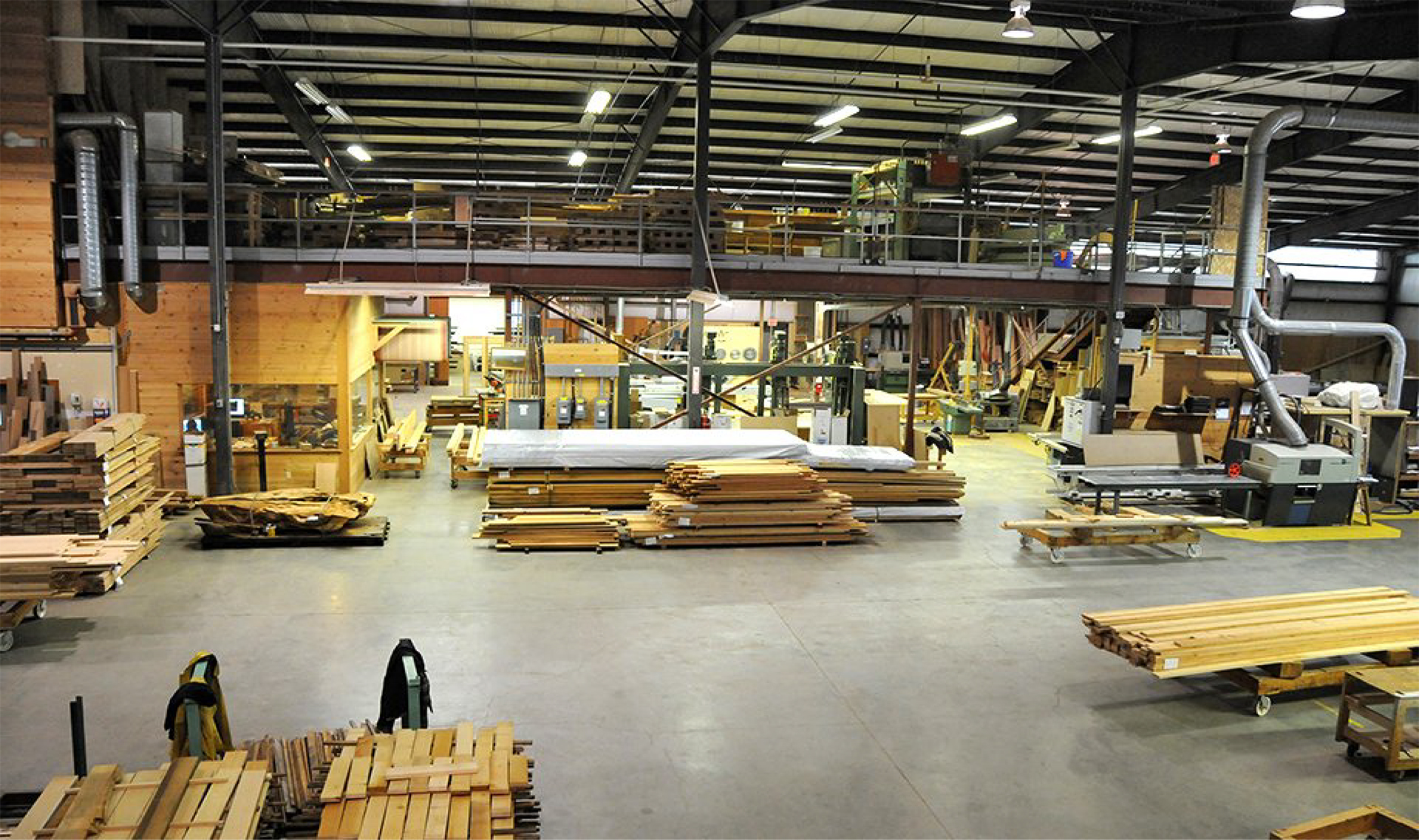
Custom millwork requires disciplined oversight from initial scope through final profiling. We apply a triple QA review that moves from sales to production to moulder lead, ensuring dimensional intent remains intact at each stage. Install-ready millwork benefits from vertical integration that covers fibre selection, profiling, and finishing within one coordinated chain. Early drawing coordination allows us to align millwork tolerances with actual project constraints before production begins.
Project-minded grading ensures boards are selected with installation performance in mind rather than appearance alone. Made-to-order millwork fabricated under controlled processes reduces variability across long runs. Our technical specification support helps you anticipate expansion, fastening, and moisture management factors before fabrication. You gain reduced rework, cleaner installation, and dependable performance built on consistent execution and documented quality control.
Key Takeaways
- Install-ready millwork reduces field cutting when scope and tolerances are defined early.
- Accurate made-to-order millwork inputs protect dimensional integrity.
- Millwork tolerances aligned with AWI and NAAWS standards support predictable fit.
- Coordinated shop drawings and site checks limit reduced rework challenges.
- Vertical integration and disciplined QA strengthen custom millwork performance.
Common Questions
How Do I Set Millwork Tolerances For My Custom Millwork Project?
You should define millwork tolerances based on application, exposure, and industry benchmarks such as AWI guidance. Clear dimensional limits for width, thickness, and profile detail help fabrication teams maintain consistency. Install-ready millwork also requires moisture content targets that match your installation conditions. When you work with a specification partner, you gain clarity around these parameters and reduce the risk of field corrections.
How Can I Reduce Rework On A Large Install-Ready Millwork Run?
You reduce rework by confirming field measurements and coordinating with adjacent trades before production begins. Made-to-order millwork must reflect verified wall lengths, substrate conditions, and expansion allowances. Accurate shop drawings and length optimization further protect installation time. Support from a fabrication team that reviews your drawings early helps prevent costly site adjustments.
What Should I Include In My Shop Drawings For Install-Ready Millwork?
Your shop drawings should document profile dimensions, finish requirements, expansion gaps, and fastening strategy. Install-ready millwork relies on clear notations that prevent ambiguity during production. Including minimum board lengths and end-coating instructions protects long-term performance. Collaborative review with experienced fabricators strengthens drawing accuracy and supports smooth installation.
Why Does Moisture Content Matter In Custom Millwork?
Moisture content affects how wood expands and contracts after installation. Install-ready millwork must match equilibrium levels suited to your project conditions. Ignoring this factor often leads to gaps or pressure buildup across long runs. Working with a team that monitors moisture during fabrication helps protect your dimensional stability and long-term fit.
How Can A Specification Partner Support My Made-To-Order Millwork?
You benefit from early drawing coordination, tolerance review, and technical input on expansion and fastening. Install-ready millwork requires alignment between design intent and fabrication reality. A partner with integrated production oversight reduces variability and protects performance. Consistent quality control and documented review processes help you maintain confidence from concept through installation.